 MEMBERSHIP LOGIN
 JOIN PRI
What Does It Take to Make Top-Tier Transmissions?
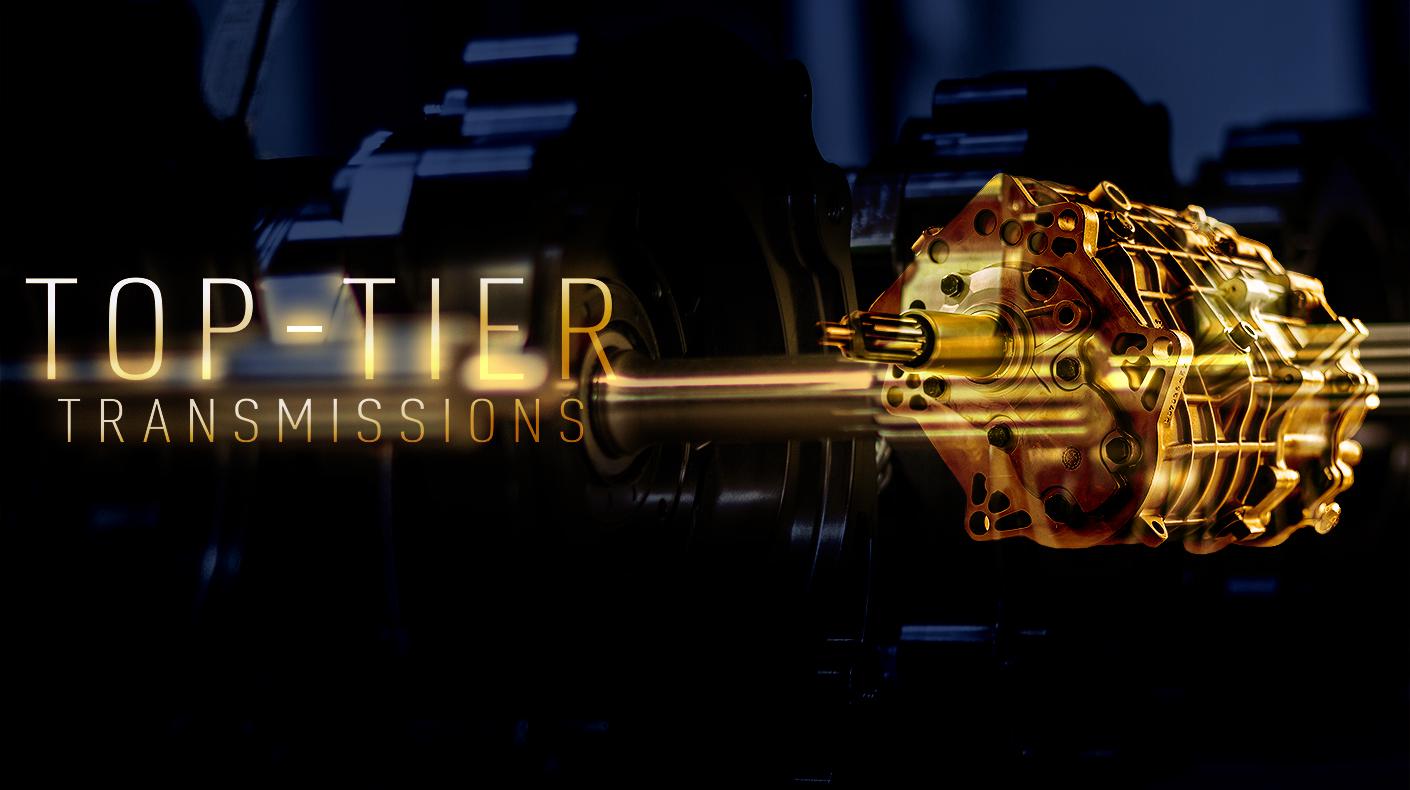
Engine builders can coax thousands of horsepower from today's race engines. But that work is all for naught if the power can't reach the wheels. Transmission manufacturers are doing everything they can to ensure that their products aren't a weak link in the racecar's driveline.
That holds especially true for companies that supply transmissions for race teams in top-tier series. Their strategies range from beefy components and liberal lubrication to "secret sauce" materials.
One thing they have in common: Personalization. Almost all the companies we spoke to build transmissions specific to each customer. There are very few off-the-shelf transmissions here.
"We like to develop a relationship with each racer," said Mike McCormick of Automatic Transmission Design (ATD), Germantown, Wisconsin. "Even if we do build the same unit back-to-back for multiple customers, it's important to us to develop the relationship so we understand what the customer needs, so that the performance meets their expectations."
That level of personalization comes with a cost—literally. "Obviously, the engineering can become substantially more involved," McCormick acknowledged. "For parts that are one-off, fewer shared features will increase the cost of the unit."
But for racers at the tip of the spear, spending thousands of dollars on a transmission is an investment that pays off.
"The main advantages [of using our sequential gearboxes] are shifting speed, as fast as 50 milliseconds, and the elimination of mis-shifts," said Vilius Saltenus of the Lithuanian transmission manufacturer Samsonas Motorsport. "This allows the driver to stop worrying about gear selection and focus entirely on speed and the racing line. Durability and the ability to handle very high-power engines, like in drift or drag cars, are also key. Those milliseconds add up to seconds where many shift changes occur, such as in rallying or circuit racing, and everyone knows what shifting speed means in drag racing."
What follows is a brief overview of what goes into top-tier racing transmissions, broken out by racing type.
Drag Race
A Turbo 400-based transmission for one of McCormick's Pro Mod customers, with a car "in excess of 3,000 horsepower," starts with an SFI-approved Reid Racing case. "It's a safety thing," he said. "That case is truly explosion-proof."
When it comes to selecting components, "big power leads to big shafts," McCormick said. Common oversize input shaft diameters range from 1 1/8 to 1 1/4 inches. Choice typically depends on the shaft size that fits the customer's torque converter.
Input shaft size also determines the pump and drum selection, as the three components "go together," he said. "For drag racing, we typically select billet aluminum drums because lighter accelerates faster. We're less concerned about the rigidity of the drums because we're not repeatedly accelerating and decelerating them throughout the race."
Gear ratio selection is determined by multiple factors, ranging from desired starting line ratio and shift rpm drop to track length. It's also affected by whether the driver wants a two- or three-speed transmission. "In the last few years, we've seen more close-ratio three-speeds in the top levels of drag racing than two-speeds," McCormick said. It boils down to driver preference, but the power adder also makes a difference.
"A turbo car can leave softer on the tire, so sometimes it can handle a little more ratio off the line than a big blower car. With a turbo, the power band prefers higher rpm, so three-speeds and turbos are a little more common."
A three-speed transmission can require a big main shaft at that level, McCormick said. "It's what transfers the energy from the input shaft and forward drum assembly into the gear train." That means upgrading "the gear set, the direct drum, and the center support. And the case has to have a provision for what we call center lube, or side oiling."
To read the full article, plus hundreds of other articles like it for free, sign up for a digital subscription to PRI Magazine on Zinio here.
Once you download the Zinio mobile app or are logged into Zinio on a desktop browser, you will gain immediate access to more than a year's worth of content, including "What Does It Take to Make Top-Tier Transmissions?" here and additional coverage in the May/June 2026 issue here.